What Is tDCS? The EASE Neuromodulation Device Explained
tDCS is a gentle, drug-free way to influence brain activity — and at VCAN it is delivered using EASE, India's first CDSCO-approved tDCS device. Here is what it is and how it may help.
What is tDCS, in plain language?
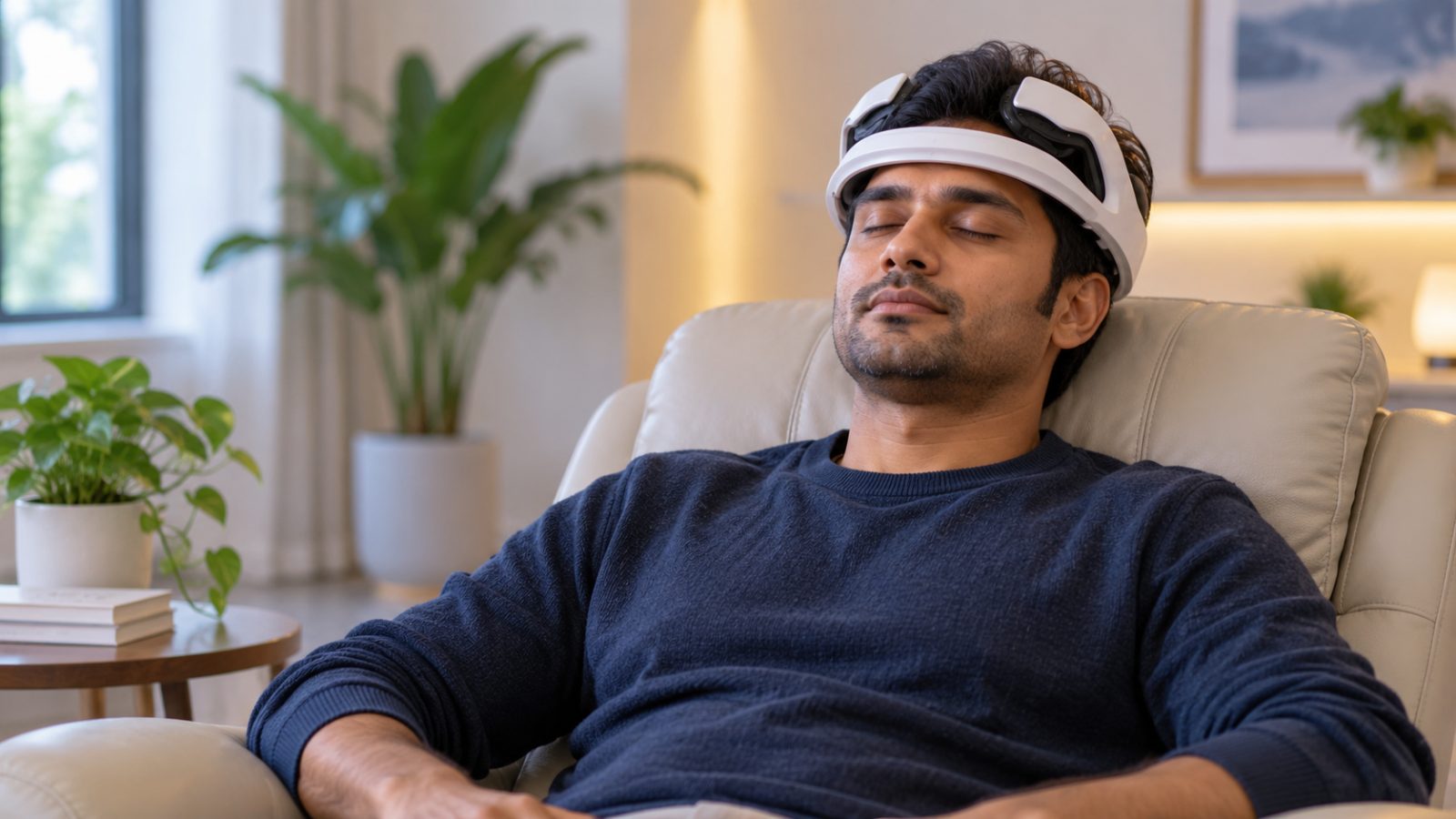
tDCS (transcranial Direct Current Stimulation) is a gentle, drug-free brain treatment. A small, carefully controlled electrical current is passed through soft pads placed on the scalp, nudging the activity of brain areas involved in mood, focus and craving. The EASE device brings this technology to VCAN in a compact, comfortable form. It is non-invasive, painless, and you stay fully awake throughout.
How the EASE device works
Where medication acts on the whole body, tDCS gently targets specific brain circuits. Over a course of sessions, this can help lift mood, sharpen concentration and reduce cravings — supporting the brain to function in a healthier pattern.
- You sit back comfortably, fully awake
- Soft pads are placed on the scalp
- A gentle tingling for a few minutes
- You return to your day immediately
Who the EASE device may help
- Depression and low mood
- Anxiety
- Cravings in addiction recovery
- Focus and cognitive support
- Skin conditions on the scalp
- Certain implants are reviewed
- Severe cases may need combined care
- A specialist confirms suitability
tDCS alongside other care
tDCS is not a replacement for a full treatment plan — it works best as one part of it. At VCAN the EASE device sits alongside psychiatry, counselling and, where suitable, rTMS or medication, all coordinated by one specialist team.
Assessment
A specialist confirms EASE is right for you.
Setup
Pads positioned for your target area.
Sessions
A short, planned course of treatments.
Review
Progress tracked and the plan adjusted.
Book a confidential assessment with our team.
Why EASE works best at VCAN
The EASE device is powerful, but its real value comes from how it is used. At VCAN, tDCS is never a standalone gadget — it is one carefully chosen part of a complete plan built around the individual. A specialist first confirms it is suitable, sets the right target and settings, and tracks progress at every stage.
Because VCAN offers psychiatry, counselling, rTMS and tDCS together under one roof, your care is coordinated by a single team rather than scattered across providers. If one approach needs adjusting, the plan adapts — smoothly and safely. This is the difference between a treatment that is merely available and one that is genuinely effective.
tDCS is drug-free, painless and fits easily around daily life, which makes it especially welcome for people who have struggled with medication side-effects. If you are curious whether it could help, the first step is simply a confidential assessment — our team will tell you honestly whether EASE is the right fit for you.
Frequently Asked Questions
Can I combine EASE with rTMS?
Is EASE suitable for older adults?
How many EASE sessions will I need?
Is tDCS safe?
Does it hurt?
How is tDCS different from rTMS?
Can I have EASE sessions alongside medication?
Written by the VCAN Medical Team, Vadodara Centre for Addiction & Neuropsychiatry. This article is for information and awareness only and is not a substitute for medical advice.